Rithik Singh

University of Toronto · Rotman Commerce '29 · GPA 3.94

Rithik Singh

Quantitative equity research to complement fundamental portfolio management.

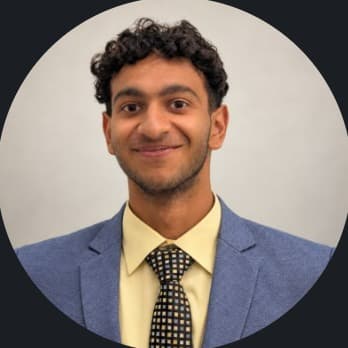
Portrait of Rithik Singh

Second-year studying finance, with minors in computer science and statistics. Most recently at Agilith Capital, where I built factor-research infrastructure, a portfolio screening tool used by two portfolio managers, and an LLM earnings-research agent.

NowThis fall: independent research on macro-driven rotation in US and Canadian equities, focused on market breadth and on long- versus short-duration stocks.

Work

Agilith Capital

2026

Quantitative research infrastructure · Summer Analyst

Question
Of more than a thousand candidate factors, which ones hold up out of sample, at which holding periods, and in which market regimes?
Built
  • A factor-evaluation pipeline with point-in-time, survivorship and look-ahead controls, Newey–West HAC t-tests and Benjamini–Hochberg FDR control, run across eight partitions.
  • A vendor's combined six-model equity-ranking framework, pulled apart into its individual models and recombined with non-negative least squares on a walk-forward test.
  • A portfolio screening and ranking tool built on the factors that held up, with results conditioned on 11 macro dimensions, used by two portfolio managers.
  • An LLM earnings-research agent with deterministic numeric validation.
  • The firm's local research databases, about 480 GB of market and fundamental data, maintained and then migrated to the cloud.
Result
  • 1,178 specifications screened. The 66 that held a Newey–West t-stat above 3 in at least half their tests were combined into a new model.
  • The recombined vendor model showed apparent alpha that did not survive sector neutralization, so it stayed in research, out of the book.
  • Earnings-call review took about half as long in Q2 2026 testing.
Stack
Python · SQL · PostgreSQL · Azure SQL · LLM tooling

Algorithmic trading competition · UTEFA

Question
Can a trend-and-momentum strategy stay profitable after a 0.5% fee on every trade?
Built
  • An EMA-crossover regime signal that moves between invested and cash, with momentum ranking into a three-stock basket and an ADX trend filter.
  • Volatility and ATR tilts on the weights, macro-sensitive exposure scaling, a 5% trailing stop and a 20-trade cap, all built to survive a 0.5% fee on every trade.
  • 144 parameter sets compared in a grid search, alongside bootstrap and correlated-GBM simulations.
Result
Third place, with a 24.3% simulated return and a 1.78 Sharpe over 252 trading days, net of fees.Team entry with Ethan Yang, Michael Xu and Sina Sharifi.
Stack
Python

Market making and tender arbitrage · Rotman Interactive Trader

Question
When is a tender or a quote still worth taking after liquidity, inventory and fees?
Built
  • Tender-arbitrage and market-making algorithms trading against live order books.
  • Tenders accepted on VWAP and liquidity rules, quotes skewed to hold inventory near flat, fees priced into every execution, and positions flattened automatically before the close.
Result
Fourth of 26 teams.Team entry with Michael Xu.
Stack
Python · REST APIs

PassPlanDeployed

2026

Monte Carlo decision engine

Question
How likely is a profitable strategy to reach a payout before it breaches a loss limit?
Built
  • A Monte Carlo engine that resamples TradingView, NinjaTrader and MetaTrader 5 trade histories into 20,000 paths.
  • Each path runs against the account's trailing-drawdown, daily-loss, consistency and withdrawal rules, with optional weighting toward recent trading days.
  • Correlation analysis and portfolio optimization across several accounts at once.
Result
In use, and checked against the realized outcome of a live strategy, which went on to reach a payout.
Stack
Python · FastAPI · Next.js
Illustrative Monte Carlo of a funded trading accountSynthetic 60-day account paths. 51% reach a +$3,000 payout target; 47% breach a trailing $2,000 drawdown first.
Illustration only: synthetic paths against a payout target and a trailing drawdown
Case studyCodeNote: Hyper-vis is my GitHub alias.

Also

  • Volatility Forecasting ToolkitARCH, GARCH(1,1) and EWMA models fitted to JPMorgan returns, with walk-forward backtests, a CLI, 12 unit tests and CI.
  • FirstShotOutbound system for university students, with AI company research, structured workflows and a human review step. Running in production. It is also how I found Agilith, a firm that had stopped taking interns, after 150 cold emails.
  • Trading systems for live competitionsExecution and market-making tooling built for live trading games, including the inaugural Waterloo Trading Competition, where I was selected from about 1,500 applicants and competed against students from across North America for a $10,000 prize pool sponsored by Jane Street, Citadel Securities and HRT.

Experience

  1. Agilith Capital

    May – Aug 2026

    Summer Analyst, Quantitative & AI Portfolio Management

    Factor research, data infrastructure and AI tools for the firm's Canadian equity portfolio managers.

  2. Quantitative Finance Club, UofT

    2026

    Quantitative Research Analyst

    Built an M1/M5/M30 XAUUSD regime classifier from volatility clustering, autocorrelation and directional persistence, with links to equity volatility and rates.

  3. Rotman International Trading Competition

    Feb 2026

    Operations Volunteer

    Ran trading-lab systems and live support for teams from 35 universities.

  4. Toronto Student Investment Council

    Oct 2025 – Apr 2026

    First-Year Analyst

    More than ten M&A case analyses and equity pitches, covering research, valuation and catalysts, then defending the call.

  5. Fund Launch

    May – Jul 2025

    Fund Management Summer Intern

    Selected from 1,000 applicants; presented a mandate, portfolio construction and launch plan for a new equity fund.

Approach

The steps an idea has to pass before it goes into a portfolio. Most ideas fail one of them.

  1. HypothesisStart from an economic reason it should work.
  2. Point-in-timeNo survivorship or look-ahead bias.
  3. ValidationHAC t-tests, FDR control, neutralization.
  4. FalsificationLook for the reasons it might fail.
  5. PortfolioRanking, sizing, risk, monitoring.

About

I'm interested in how investment ideas get tested, and in building the data and AI tools that make that testing faster and more reliable.

Away from a screen, I've played 200+ competitive cricket matches (3,000+ career runs), and I'll take golf, tennis or a new city whenever I can.

Education

Rotman Commerce, University of Toronto

2025 – 2029

BCom, Management Specialist (Finance) · Minors in Computer Science and Statistics

GPA 3.94 / 4.00 · Dean's List

Coursework: Calculus I–II, Linear Algebra, Data Structures & Algorithms, Probability & Statistics

Recognition

Top 3
UTEFA QuantiFi Algorithmic Trading CompetitionTeam of four, 2025
4th / 26
RCFA Trading CompetitionTeam of two, 2026
3rd / 2,200
DECA ICDC, Accounting ApplicationsInternational
6th / 1,100
Waterloo Financial Literacy CompetitionNational
$10,000
President's Scholar of ExcellenceUniversity of Toronto

Certifications

  • Bloomberg Market Concepts
  • Python for Quantitative Finance, Quant Finance Institute

Contact

The best way to reach me is email.

rithik.singh@mail.utoronto.ca

Toronto, Canada